Summary:
This report examines four recent Arab articles on Iran, the Gulf, deterrence, and the post-war regional order. Their shared argument is that the Gulf has entered a new strategic phase in which older assumptions no longer suffice. The region can no longer take for granted that mediation will keep it outside war, that conventional military force alone will deter attacks, or that long-standing alliances will automatically guarantee security. Taken together, these articles argue that the Gulf now faces a wider environment in which military escalation, energy security, diplomacy, global markets, and shifting great-power relations are all tightly inter-connected.
The first article, by the Arab Center for Research and Policy Studies, covers the possible repercussions of Iranian attacks on Gulf states. The paper begins from an important paradox. Several Gulf states actively attempted to de-escalate the situation and preserve diplomatic space. Oman and Qatar are presented as especially active mediators who sought to create a basis of understanding between Washington and Tehran, and the paper notes that these efforts had made visible progress before the conflict widened. Yet these mediation efforts did not prevent the Gulf states from becoming targets. This is the first major point of the article: the Gulf can be drawn into war even when it seeks moderation, restraint, and negotiation rather than confrontation.
The key question in this section is why moderation failed to provide protection. The paper’s answer is that Iran’s wartime logic became broader than the separate political positions of Gulf countries. Iran wanted to demonstrate that any attack on it would carry costs beyond its own territory. In that sense, the Gulf states were targeted not because they adopted identical policies, but because the Gulf represented a strategic arena through which Tehran could widen pressure on the US, raise the cost of war, and signal that the conflict would not remain geographically limited. The author therefore treats the Gulf not as a neutral bystander, but as an exposed space within a larger confrontation.
The paper then turns to Iranian motives. It highlights contradictions in official statements. Some Iranian figures denied responsibility, some claimed that only American military sites were the intended targets, and others implied that not all the attacks had been carried out under state sanction or control. The author interprets this inconsistency as tactical ambiguity and as evidence of fragmentation within Iran. Still, he insists that the broader purpose is clear: Iran’s main goal was to raise the cost of the American-Israeli war against it by extending the zone of insecurity into the Gulf and demonstrating that any pressure on it would produce regional and global consequences rather than remain confined to one front.
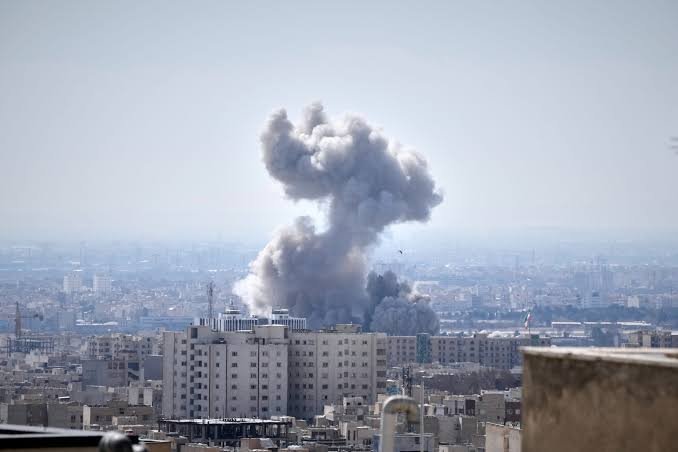
The article reinforces this interpretation by noting that the attacks were not confined to military facilities. They also targeted airports, service centers, tourist locations, residential areas, and energy infrastructure. This is significant because it weakens the claim that Iran was merely responding to foreign military bases. The broader pattern suggests that Tehran wanted to demonstrate the interdependence of its own security and Gulf stability. The paper implies that Iran was effectively sending the message that if it could not remain secure, the Gulf could not either. This is a central idea in the article and one of its most important analytical conclusions.
From motives, the paper moves to consequences. Its main economic point is that the Gulf’s role in global oil and gas markets makes it particularly useful as a theater of coercion, and therefore especially vulnerable during war. Because Gulf production, reserves, shipping routes, and infrastructure are deeply tied to the global economy, attacks in the Gulf quickly produce wider effects through shipping prices, insurance, and supply chains. The article argues that Iran hoped that these disruptions would increase pressure on the United States and other major powers by demonstrating that war against Iran would not remain a contained military event but would instead generate broad economic costs across the international system.
The article’s political conclusion is equally important. It argues that repeated attacks may lead Gulf elites and societies to question the strategic value of the American military presence. If Gulf states host bases and buy advanced defense systems, but still remain exposed, then the alliance begins to appear less like protection and more like vulnerability. This conclusion moves beyond Iran and addresses the burden of dependence itself, with the deeper implication being that Gulf security cannot rest comfortably on inherited assumptions about alliance guarantees. The paper therefore links Iranian behavior to a wider crisis in the credibility of the traditional Gulf security framework.
Where that conclusion leaves off, Khaled Al Jaber’s policy memo begins. His main argument is that wars do not truly end when the fighting stops, because their consequences continue to reshape political and strategic orders. The memo’s central aim is to explain why the Gulf must reposition itself after war instead of assuming that the previous order will return. The key question Al Jaber raises is whether Gulf states will remain passive adapters to global change or become active participants in shaping the next order. In this way, his memo shifts the discussion from immediate crisis analysis to long-term strategic design.
Al Jaber’s first major argument is that Gulf security can no longer be organized around a single threat. Historically, Iran occupied the center of Gulf threat perception and alliance planning. But recent developments, including Israeli military operations, direct exchanges between Israel and Iran, and tensions across several fronts, have shown that danger can also arise through interaction among multiple actors. The implication is not that Iran no longer matters. It is that Gulf strategy must move beyond one-dimensional thinking. Gulf security now requires managing a more complex regional field in which several powers, not one alone, can trigger instability, escalation, and strategic surprise.
His second major argument is that deterrence itself must be redefined. Al Jaber argues that deterrence can no longer be reduced to conventional military force. Drones, missile strikes, cyber pressure, and threats to vital infrastructure have widened the range of vulnerability. For that reason, modern deterrence must include cyber resilience, technological capacity, infrastructure protection, diversified defense relationships, and active diplomatic communication. His point being that deterrence now depends not only on punishment, but also on endurance, recovery, and strategic flexibility. In this framework, the ability to keep society functioning under pressure becomes as important as the ability to retaliate against adversaries.
This broader definition leads into his discussion of the United States. Al Jaber calls for the Gulf states to, not break with, but rather recalibrate their relationship with Washington. The Gul relationship with America remains deeply rooted in military, economic, and intelligence ties, yet recent crises have exposed doubts about America’s reliability and hierarchy of commitments. His conclusion is that Gulf states should continue to work with the United States, but not treat it as the only pillar of their security. Diversification, in this sense, is not a rejection of Washington, but rather an attempt to widen strategic choice, reduce dependence, and strengthen the Gulf’s bargaining position in an increasingly fluid international environment.
From there, Al Jaber advances his strongest point: the Gulf can move from adaptation to influence. He identifies four major assets that make this possible: financial power, strategic geography, diplomatic capital, and developmental transformation. Through sovereign wealth funds, control of key maritime corridors, experience in mediation, and economic diversification programs, Gulf states possess leverage unusual for middle powers. His conclusion is that Gulf states should not merely react to a changing order, but should help shape it by building flexible partnerships, articulating a regional vision, and turning economic and diplomatic weight into political influence. This is the most ambitious and forward-looking argument in his article.
Meanwhile, Abdullah Al-Otaibi’s article, “How the Gulf Can Deter Iran,” provides the practical logic of deterrence under these conditions. He begins with the claim that the region has entered a “post-deterrence” phase. By this he means that traditional military deterrence no longer guarantees security, while the absence of full-scale war no longer guarantees stability. The key question he addresses is how the Gulf can deter Iran when the threat comes through gray-zone escalation: limited strikes, selective infrastructure targeting, and proxy pressure. His answer is that the Gulf must break the Iranian assumption that limited attacks can remain profitable, and that proxy networks can sustain pressure without imposing unacceptable costs on Tehran.
To break the first assumption, Al-Otaibi argues that Gulf states must reduce the value of the limited strikes by making its infrastructure more resilient, containing damage quickly, and ensuring that attacks do not produce major political or economic disruption. Resilience therefore becomes part of deterrence. He then adds a second requirement: uncertainty. Iran, he suggests, believes Gulf reactions are predictable and manageable. To change that, Gulf states should develop responses that are not always immediate, symmetrical, or easy to anticipate. This argument connects directly to his discussion of proxies, which he sees as part of a wider pressure system that must be weakened through coordination, disruption, and the removal of plausible deniability.
A further important dimension appears in the study, “The Economic Repercussions of the US-Israeli War on Iran Regionally and Globally,” also by the Arab Center for Research & Policy Studies, which strengthens Al-Otaibi’s main argument by showing that Gulf security is inseparable from economic resilience. The study argues that the war’s consequences extend far beyond direct military confrontation because they affect energy production, shipping routes, inflation, and food supply chains at the regional and global levels. Its main point is that Gulf states cannot assume that higher oil prices automatically benefit them during crisis, since attacks on infrastructure and disruptions in the Strait of Hormuz can restrict production and exports themselves. The study also shows, through the data and charts on pages 5 and 7, how strongly oil flows and import dependence are concentrated around the strait, making both Gulf exporters and their major Asian importers highly vulnerable to prolonged disruption.
This economic perspective adds an important layer to the study because it links deterrence and post-war strategy to questions of supply security and internal resilience. The article notes that the effects of the crisis extend not only to oil and gas markets, but also to fertilizers, trade routes, and food imports. This is especially exacerbated by the Gulf’s continued dependence on imported goods and the passage of much of its trade through vulnerable maritime corridors. The implication is that any future Gulf strategy should extend its focus beyond military deterrence, alliance diversification, and diplomacy, to also protecting critical infrastructure, securing alternative logistics routes, and strengthening economic and food security against geopolitical shocks.
In conclusion, these four articles collectively show that the Gulf is no longer confronting a temporary security disturbance, but a deeper strategic transformation that simultaneously affects war, deterrence, alliance patterns, and economic stability. What unites these authors is the view that the main challenge is no longer simply how to respond to Iran, but how to build a Gulf order capable of withstanding military pressure, limiting economic disruption, and adapting to a more fragmented international system. The broader lesson is that future Gulf security will depend on the integration of hard power, diplomatic flexibility, economic resilience, and regional coordination, as no single tool on its own is sufficient anymore. In this sense, the real significance of these articles lies in their shared call for a shift from reactive crisis management to a more comprehensive strategic vision that enables the Gulf to not only survive regional upheaval, but also redefine its place within the post-war order.
By: Mutaa Aladhami, CIGA Research Assistant